


TSA Pre✓™ is a U.S. Department of Homeland Security (DHS) Transportation Security Administration (TSA) risk-based security initiative, which lets low-risk travellers experience expedited, more efficient security screening at participating U.S. airport checkpoints for domestic and international travel.
You may be eligible for TSA Pre✓™ if you’re a:
- Canadian citizen who is a member of NEXUS
- Foreign citizen who is a member of Global Entry (see Global Entry eligibilityOpens in New Window) and not registered as a U.S. lawful permanent resident
- U.S. citizen with a Known Traveller Number (KTN)
- U.S. citizen, U.S. national, or Lawful Permanent Resident who is a member of the TSA Pre✓™ application program
- U.S. citizen who is a member of a U.S. Customs and Border Protection trusted traveller program; Global Entry, SENTRI, and NEXUS.
- Member of the U.S. Armed Forces, including those serving in the U.S. Coast Guard, Reserves, and National Guard
What does TSA Pre✓™ mean for travellers?
TSA Pre✓™ Experience:
- Being referred to a dedicated lane
- Quicker transit through airport security screening
- Faster moving lines
- Improved travel experience
No Removal of:
- Belt
- Shoes
- Light outerwear/jacket
- 3-1-1 compliant liquid bag
Also, children 12 years of age or younger travelling with you or an eligible guardian will be allowed to accompany you/an eligible guardian through the TSA Pre✓™ lane.
To experience TSA Pre✓™, you must provide us with your Known Traveller Number (KTN) before or at time of check-in:
- If you are completing your check-in at the airport directly with an agent or using one of our self-service kiosks the TSA PRECHK indicator will print on your boarding pass if you are eligible;
- If you are checking in online or on your mobile device, the TSA PRECHK indicator will be displayed on your web or electronic boarding pass and incorporated into the 2D barcode if you are eligible, allowing you to proceed directly to the security screening point when arriving at the airport.
Learn more about how TSA manages the TSA Pre✓™ Opens in New Windowrisk-based security pre-screening initiative and see our FAQs below for more information on the program.
I’d like to participate in TSA Pre✓™ for my next flight. What do I need to do?
If you’re a member of a DHSTrusted Traveler Program, or possess a Known Traveller Number (KTN), you are eligible.
To participate in TSA Pre✓™, please enter your PASS ID, which is your KTN, in the Known Traveller Number field when booking your flight as shown below.
You’ll find the KTN field on the Who is travelling page:

This image highlights the placement of the Known Traveller Number field, which is located in the passenger details section when completing a booking that requires this information.
You can also enter your PASS ID in the Known Traveller Number field when you enter your Electronic Advance Passenger Information System (APIS) information:
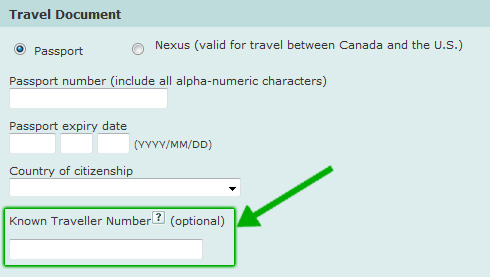
This image highlights the placement of the Known Traveller Number field, which is located in the travel documents section when entering your Advance Passenger Information System details for a booking that requires this information.
Your Pass ID (KTN) is located on the back of your program membership card if you are a:
- Canadian citizen who is a member of NEXUS,
- U.S. citizen enrolled in Global Entry, NEXUS, or SENTRI.
Here’s an example of the PASS ID number on the back of a NEXUS card:
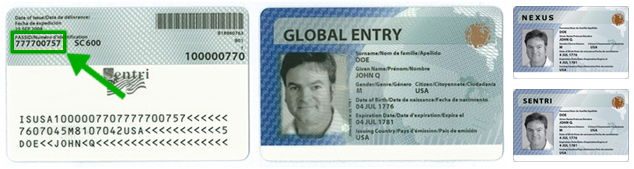
This image first shows the back of a NEXUS card, with the PASS ID highlighted in the top left corner of the card. Next are examples of the front of GLOBAL ENTRY, NEXUS and SENTRI cards.
Members of the TSA Pre✓™ application program are not issued a card, but are mailed a Known Traveller Number.
How will I know that I have been cleared for TSA Pre✓™?
Travellers who have been cleared for TSA Pre✓™ will have information embedded in the barcode of their boarding pass. Once the boarding pass is scanned at the checkpoint, the passenger may be referred to a TSA Pre✓™ lane. If you have been cleared for TSA Pre✓™, you will see the letters TSA PRECHK in the top right-hand corner and at the bottom left of your kiosk or airport counter printed Air Canada boarding pass, next to the barcode as seen below.
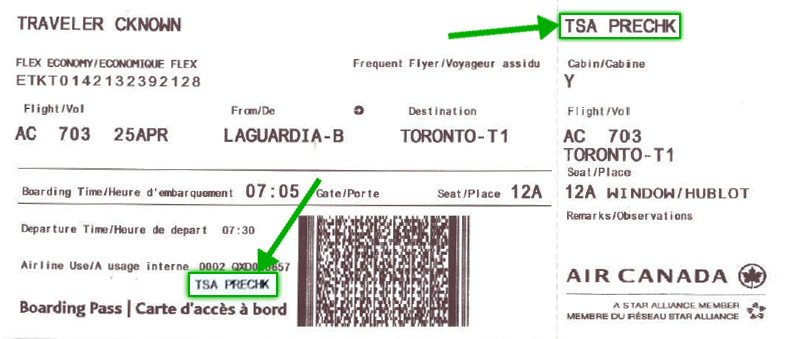
This is an image of a printed Air Canada boarding pass. On it are highlighted the letters TSA PRECHK in the top right-hand corner and at the bottom left of the boarding pass, next to the barcode.
If you are checking in online or with your mobile device, the TSA PRECHK indicator will be displayed in the top portion of your web or mobile boarding pass and will also be incorporated into the 2D barcode.
When TSA Pre✓™ is available:
TSA Pre✓™ is offered to Air Canada passengers departing from these
participating U.S. airports* and, where available, on connecting U.S. flightsOpens in New Window.
If you’re departing from one of the participating U.S. airports referenced above, your boarding pass will be scanned at the checkpoint, and you may be referred to a TSA Pre✓™ lane.
Because TSA determines a passenger's eligibility for TSA Pre✓™ on a flight by flight basis, it’s important to remember that there is no guarantee that you will benefit from expedited screening, even if:
- you have a Known Traveller Number and
- you’re departing from an airport which offers TSA Pre✓™
TSA will always incorporate random and unpredictable security measures throughout the airport and no individual will be guaranteed TSA Pre✓™ screening.
When TSA Pre✓™ is not available:
TSA Pre✓™ is not offered to Air Canada passengers departing from any other airport than those listed above.
If you’re departing from an airport where no Air Canada TSA Pre✓™ checkpoint is available, please proceed to the standard security lane, even if:
- you have a Known Traveller Number and
- the TSA Pre✓™ indicator (TSA PRECHK) appears on your boarding pass
* View a complete list of all participating airports Opens in New Window, as well as the TSA Pre✓® Checkpoint ScheduleOpens in New Window for your airport.
I qualify for TSA Pre✓™. Will I receive expedited screening each time I travel?
The TSA determines a passenger's eligibility for TSA Pre✓™ on a flight by flight basis. Members of DHS Trusted Traveler programs are more likely to receive expedited screening.
The TSA will always incorporate random and unpredictable security measures throughout the airport and no individual will be guaranteed TSA Pre✓™ screening.
How can I participate in TSA Pre✓™?
Travellers may apply for expedited screening through a DHS Trusted Traveler program; TSA Pre✓™ application program, or NEXUS, Global Entry or SENTRI.
If you’re currently a member of a DHS Trusted Traveler program, you’re already eligible for TSA Pre✓™ when you fly on a participating airline out of a participating airport*.
You must enter your PASS ID in the Known Traveller Number field when completing your booking. Always remember to enter your full name, date of birth and PASS ID exactly as they appear on your membership card. It is recommended to use the same name on your passport and DHS Trusted Traveler Program when booking your reservation.
When you book your flight at aircanada.com, you’ll find the Known Traveller Number field on the Who is travelling page:
This image highlights the placement of the Known Traveller Number field, which is located in the passenger details section when completing a booking that requires this information.
You can also enter your PASS ID in the Known Traveller Number field when you enter your APIS information:
This image highlights the placement of the Known Traveller Number field, which is located in the travel documents section when entering your Advance Passenger Information System details for a booking that requires this information.
* Remember that TSA Pre✓™ is available to Air Canada passengers departing from these participating U.S. airports .
View a complete list of all participating airportsOpens in New Window, as well as the TSA Pre✓® Checkpoint ScheduleOpens in New Window for your airport.
What information am I agreeing to share if I participate in TSA Pre✓™?
By participating in TSA Pre✓™, you will provide Air Canada permission to share your reservation and trusted traveller information with TSA. After reviewing this information, TSA will determine if you are eligible for expedited screening.
If you have been cleared for TSA Pre✓™, you will see the letters TSA PRECHK in the top right-hand corner and at the bottom left of your kiosk or airport counter printed Air Canada boarding pass, next to the barcode as seen below.
This is an image of a printed Air Canada boarding pass. On it are highlighted the letters TSA PRECHK in the top right-hand corner and at the bottom left of the boarding pass, next to the barcode.
If you are checking in online or with your mobile device, the TSA PRECHK indicator will be displayed in the top portion of your web or mobile boarding pass and will also be incorporated into the 2D barcode.
Because the TSA determines a passenger's eligibility for TSA Pre✓™ on a flight by flight basis, it’s important to remember that there is no guarantee that you will benefit from expedited screening, even if:
- you have a Known Traveller Number and
- you’re leaving from an airport which offers TSA Pre✓™
At which airports does Air Canada participate in TSA Pre✓™?
TSA Pre✓™ is only available to Air Canada passengers departing departing from participating U.S. airports .
View a complete list of all participating airportsOpens in New Window, as well as the TSA Pre✓® Checkpoint ScheduleOpens in New Window for your airport.
TSA Pre✓™ is not available at my airport. Why was a TSA Pre✓™ indicator displayed on my boarding pass?
Travellers are vetted for TSA Pre✓™ every time they fly. TSA and airlines cannot limit printing of the TSA Pre✓™ indicator to only TSA Pre✓™ participating airports.
I have more questions about TSA Pre✓™. Whom do I contact?
If you still have questions about TSA Pre✓™, please contact the TSAOpens in New Window.